
NanoVNA Versions Compared
The NanoVNA name covers a lot of different instruments now: the H, H4 and F from the original open source project, our V2 series, and the VNA6000. The model names do not tell you much about what is inside, and some sellers do not help. There are three architectures in circulation and four models we build today. The hardware comes first, then the models, using the numbers from each product page.
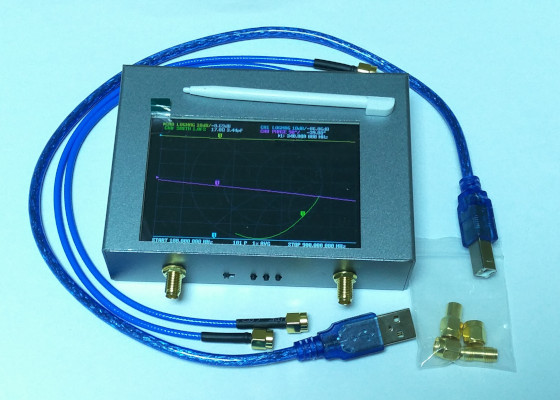
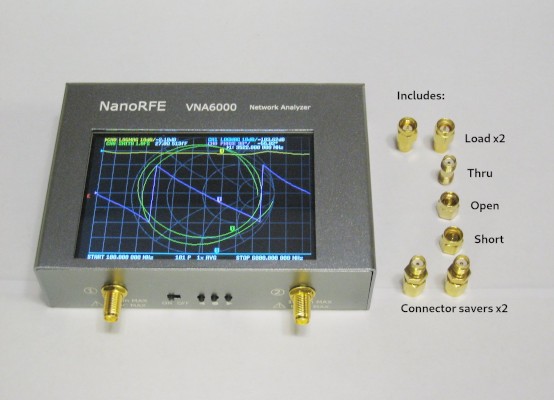
Three Architectures: Legacy, S-A-A-2, and VNA6000
The three generations differ in the RF path, not in the firmware or the user interface. The RF path sets the noise floor and the usable frequency range, so the architecture matters more than the model name:
- Legacy (NanoVNA-H, H4, F): a 50kHz to 300MHz analyzer built around a single SA612A mixer stage, with an audio codec doing the detection. It reaches 900MHz on harmonics. Fine for tuning an antenna from 80m through 2m; above 300MHz the trace turns noisy and the readings cannot be trusted. We stopped selling this design in 2020.
- S-A-A-2 (NanoVNA V2): a from-scratch design by HCXQS/NanoRFE, not a development of the edy555 V1 and sharing no circuitry with it. Dual ADF4350 synthesizers and an AD8342 mixer, measuring on the fundamental. The current V2 Plus4 uses our VNA-R architecture, which adds temperature drift cancellation and reduced crosstalk: no visible drift indoors, 90dB dynamic range. This is the architecture behind the 4GHz models we sell.
- VNA6000: a new design rather than a development of the S-A-A-2. Every sub-module sits in its own shield, and the RF front-end and clocking were redone for 6GHz. 110dB dynamic range on the B model at 5.8GHz, with built-in temperature compensation, in a 300g enclosure.
Official NanoRFE Model Comparison
Our four current models, side by side. The dynamic range figures are calibrated measurements, and the averaging and IF bandwidth used for each are listed on the model page. A dynamic range number without its conditions is not much use.
| NanoRFE portable VNA series | ||||
| V2 Plus4 | V2 Plus4 Pro | VNA6000-A | VNA6000-B | |
| Max dynamic range | 90dB | 90dB | 95dB | 110dB |
| Freq. range (Hz) | 50k - 4G | 50k - 4G | 50k - 6G | 50k - 6G |
| Trace noise | Low | Lower | Lower | Lower |
| Sweep time | 0.25s | < 0.2s | < 0.2s | < 0.2s |
| Adjustable IFBW | ✓ | ✓ | ✓ | |
| Temperature drift compensation | ✓ | ✓ | ✓ | ✓ |
| TDR | ✓ | ✓ | ✓ | ✓ |
| TDR resolution | 9mm | 9mm | 6mm | 6mm |
| Weight | 300g | 300g | 300g | 300g |
| Touchscreen | ✓ | ✓ | ✓ | ✓ |
Detailed Model Breakdowns
Which comes down to: the V2 Plus4 for antennas and general bench work, the V2 Plus4 Pro when you need to measure something narrow, the VNA6000-A for anything at 5GHz and above, and the VNA6000-B for filters and duplexers where the notch depth is what you need to see.
NanoVNA V2 Plus4 (50kHz to 4.4GHz, 90dB)
The V2 Plus4 measures on the fundamental from 50kHz to 4.4GHz with no harmonics and no overclocking of the synthesizer, in our aluminum enclosure, at 90dB dynamic range with AVG=20. Trace noise is 0.03dB RMS because every unit is tuned at the factory, and the sweep is about 4x faster than the first S-A-A-2 models (0.25s default). A calibration saved to a memory slot holds for months rather than the half hour the cheaper instruments manage, which matters if you calibrate once at the start of a session instead of before every measurement. For antenna tuning, duplexer alignment and filter testing it does the job of a bench analyzer costing several times as much.
NanoVNA V2 Plus4 Pro (adjustable IFBW)
The V2 Plus4 Pro is the Plus4 with a specially designed IF filter added in the signal path. Lower cost VNAs switch the test signal quickly, which puts a floor on how narrow a device they can resolve; narrowing the IF bandwidth slows the receiver down and removes that limit, so crystals and narrow band filters become measurable. Default sweep time is 0.16s, and the noise floor is lower: 96dB typical against 90dB on the Plus4, at AVG=20. It was called the V2 Plus5 until we renamed it, so if you see the old name in a forum post it is the same instrument: same firmware, software and user interface.
VNA6000-A (6GHz, 95dB)
The VNA6000-A is the 6GHz model. It measures on the fundamental all the way up, so nothing runs past its rated range above 4.4GHz. 95dB dynamic range at 5.8GHz, at 300g against 2.5kg or more for the name brand portable VNAs it replaces. The same instrument covers the HF and VHF ham bands and the 5.8GHz ISM band without a second box.
VNA6000-B (6GHz, 110dB)
The VNA6000-B is the same 6GHz platform with tighter internal component matching: 110dB at 5.8GHz, temperature compensation, and 0.01dB RMS trace noise. That is enough range to see the stopband of a narrow filter, or the depth of a notch in a duplexer, without long averaging. It is the model to compare against a benchtop instrument, and the measurements on the VNA6000 page are there for that purpose.
Which software do I need?
All four models run the same firmware and work with NanoVNA-QT (also called VNA View) and NanoVNA Saver. Downloads, drivers and connection notes are on the NanoVNA Software page.
Beware of clones
The V2.2 design was open sourced, so most of what is sold under the NanoVNA name is somebody else's copy of it. Clones usually leave off the shielding and substitute the cheapest parts they can find, which raises the noise floor; some also ship modified firmware that hides the noise floor below a threshold so they can advertise a higher dynamic range. A V2.2 design, replicated properly, reaches about 60dB at 3GHz. Anything advertised above that is either a different design or an exaggeration. The models on this page are the ones we build and support. For what to look for in a listing, see how to spot a clone.
Where to buy
We sell direct. Every unit is verified by the original designers before it ships, and support comes from us rather than from a reseller:
- NanoRFE Store: NanoRFE Official Store
- Official Tindie Store: Shop NanoVNA V2 & VNA6000 directly from the developers